

Introduction
As water utilities worldwide move toward lower-carbon operations, reducing the environmental impact of water treatment processes has become an important priority. Beyond energy consumption, the production, transportation, and use of treatment chemicals also contribute to the overall carbon footprint of water treatment systems.
For municipal water utilities, improving chemical efficiency is an effective way to support sustainability goals. By optimizing coagulation and flocculation processes, treatment plants can reduce chemical consumption while maintaining reliable water quality.
PolyDADMAC (Polydiallyldimethylammonium chloride), a high-charge-density cationic polymer, is widely used as a coagulant aid in water treatment. Through improved particle destabilization and floc formation, PolyDADMAC can help optimize chemical dosing and support more sustainable water treatment operations.
Understanding Carbon Footprint in Water Treatment Plants
The carbon footprint of a water treatment plant refers to the total greenhouse gas emissions generated throughout its operation, including energy use, chemical consumption, transportation, and waste management. For modern water utilities, reducing these emissions has become an important part of achieving sustainability and low-carbon development goals.
Among different contributors, energy consumption and treatment chemicals are two major factors affecting the environmental impact of water treatment processes. Energy is required for pumping, aeration, filtration, and sludge treatment, while chemicals such as coagulants and flocculants also have an associated carbon footprint from raw material production, manufacturing, and transportation.
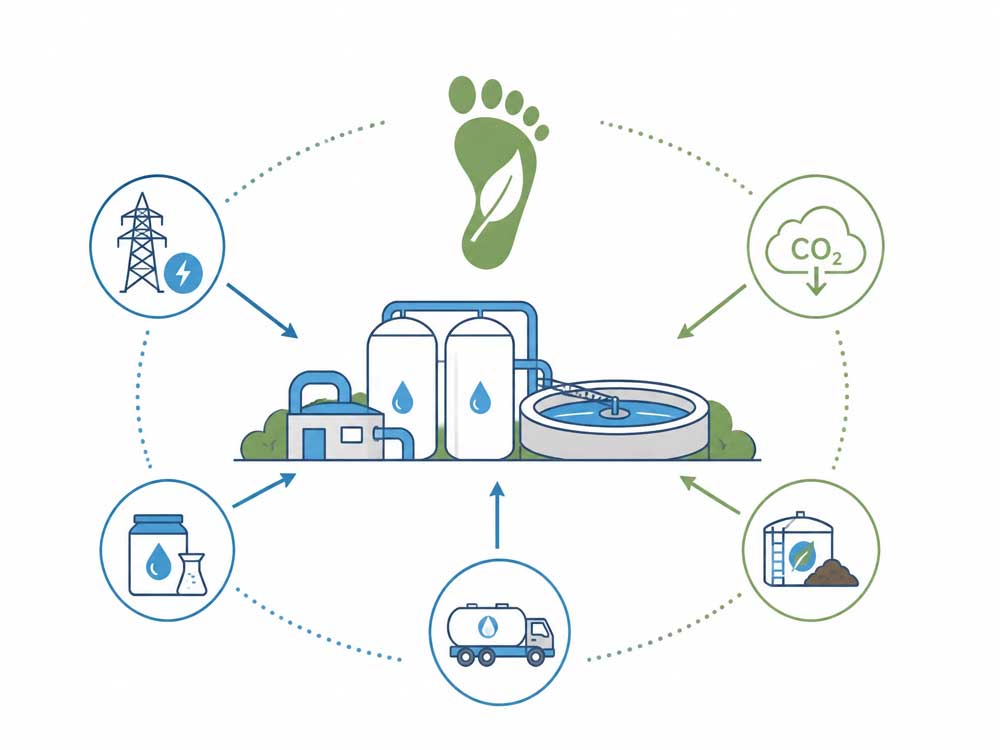
Life Cycle Assessment (LCA) studies have shown that chemical selection and dosage optimization can influence the overall carbon footprint of water treatment systems. Reducing unnecessary chemical usage, improving treatment efficiency, and selecting more effective treatment programs can help utilities minimize resource consumption while maintaining required water quality standards.
For this reason, sustainable water treatment is not only about using renewable energy or improving equipment efficiency. It also involves optimizing chemical management and improving the performance of coagulation and flocculation processes. Efficient coagulant systems can reduce chemical demand, lower sludge production, and contribute to more sustainable operation of municipal water treatment plants.
Why Chemical Optimization Matters for Low-Carbon Water Treatment
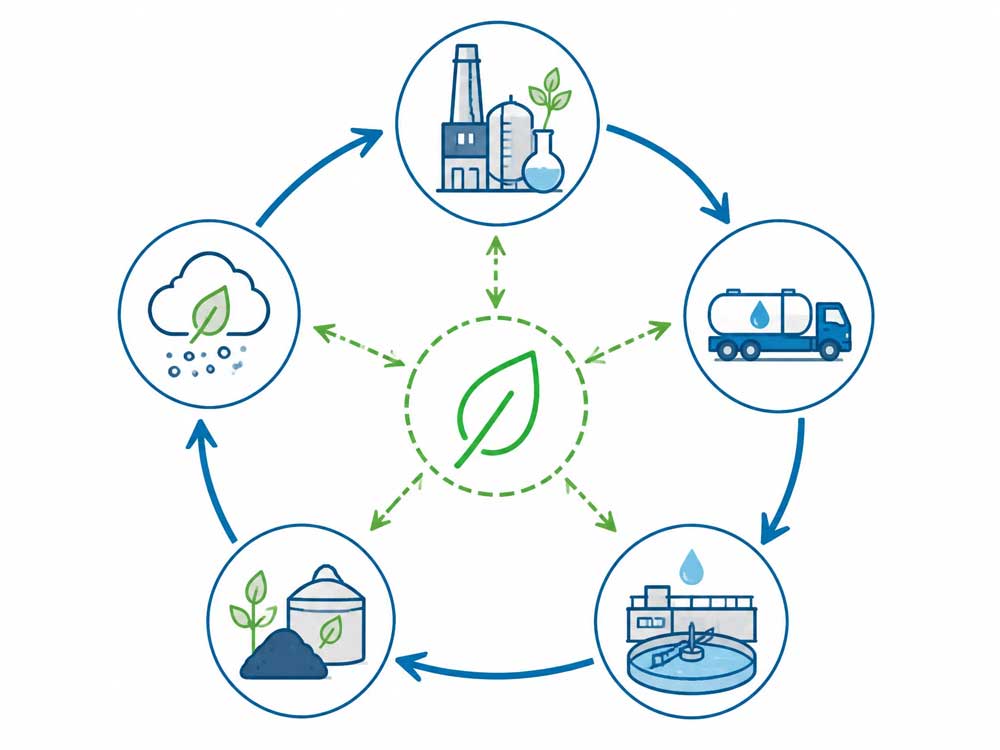
Chemical optimization is becoming an important strategy for water utilities aiming to reduce their environmental footprint. While treatment chemicals are essential for removing suspended solids, organic matter, and other contaminants, excessive chemical consumption can increase resource use, transportation requirements, sludge production, and the overall carbon impact of water treatment operations.
Life cycle assessment (LCA) studies have shown that the selection and dosage of coagulants can significantly influence the environmental performance of water treatment processes. By optimizing coagulation programs, treatment plants can achieve the required water quality with lower chemical input, improving both operational efficiency and sustainability.
For municipal water treatment plants, chemical optimization involves more than simply reducing dosage. It requires selecting suitable chemicals, improving coagulation efficiency, and balancing treatment performance with environmental objectives. Efficient coagulant systems can help:
- Reduce the total amount of chemicals required for treatment
- Minimize chemical transportation and storage demand
- Lower sludge generation associated with excessive chemical addition
- Improve overall resource efficiency
PolyDADMAC is one example of a high-efficiency polymer used to optimize coagulation processes. Due to its high charge density and strong particle neutralization ability, PolyDADMAC can enhance floc formation and may help reduce the dependence on higher dosages of traditional inorganic coagulants when properly applied.
By integrating effective chemical management strategies, water utilities can move toward more sustainable and lower-carbon treatment operations while continuing to meet strict water quality requirements.
How PolyDADMAC Supports More Sustainable Water Treatment
PolyDADMAC (Polydiallyldimethylammonium chloride) is a cationic organic polymer widely used in water treatment applications, including municipal water clarification, wastewater treatment, and industrial wastewater processes. Its applications cover various water treatment sectors, including municipal water clarification, industrial wastewater treatment, and other specialized processes. (PolyDADMAC applications in municipal and industrial water treatment) With its high charge density and strong adsorption ability, PolyDADMAC can improve coagulation performance by neutralizing negatively charged particles and promoting the formation of larger, more easily removable flocs.
From a sustainability perspective, the value of PolyDADMAC lies in its ability to help optimize coagulation processes rather than simply acting as an additional chemical input. When properly selected and dosed, PolyDADMAC can support more efficient treatment by improving particle removal and reducing the amount of other coagulants required in some treatment systems.
1. Improving Coagulation Efficiency with Lower Chemical Demand
Traditional inorganic coagulants, such as aluminum sulfate and polyaluminum chloride (PAC), are widely used in water treatment. However, achieving optimal performance often requires careful dosage control. Overdosing can increase chemical consumption, generate additional sludge, and create unnecessary environmental impacts.
Due to its high molecular charge density, PolyDADMAC can rapidly destabilize suspended particles and enhance floc formation. When used as a coagulant aid, it may help water utilities achieve desired clarification performance with a more optimized chemical program.
2. Supporting Better Resource Management
Chemical production, packaging, transportation, and handling all contribute to the environmental footprint of water treatment. By improving treatment efficiency and optimizing chemical dosage, PolyDADMAC can contribute to more efficient use of treatment resources.
Potential benefits include:
- Reduced consumption of primary coagulants
- Improved utilization of added chemicals
- Less chemical transportation and storage requirements
- More efficient operation of coagulation systems
These improvements support the broader goal of reducing the resource intensity of water treatment processes.
3. Enhancing Floc Formation and Sludge Management
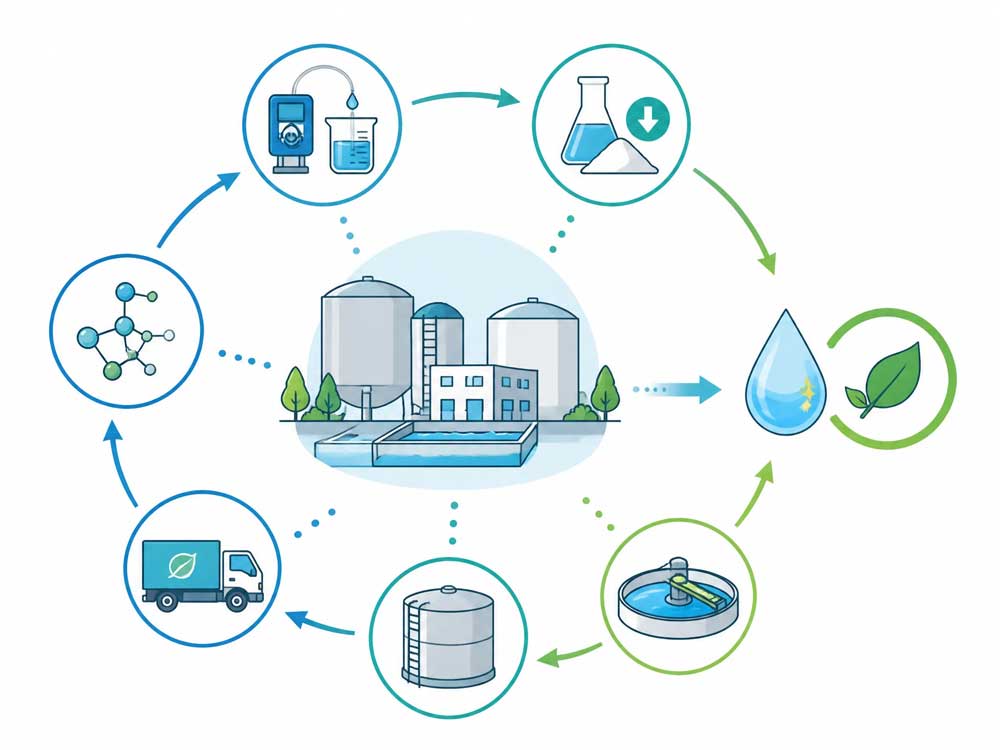
Effective coagulation and flocculation are essential for separating suspended solids from water. Poorly optimized coagulation can result in smaller flocs, lower removal efficiency, and increased chemical consumption.
PolyDADMAC can improve particle aggregation through charge neutralization and polymer bridging mechanisms, helping form stronger flocs that are easier to separate during sedimentation or filtration. In some applications, improved coagulation performance may contribute to better sludge characteristics and more efficient downstream treatment.
Supporting the Transition Toward Low-Carbon Water Treatment
PolyDADMAC itself does not directly eliminate carbon emissions from water treatment plants. However, by enabling more efficient coagulation strategies, reducing unnecessary chemical usage, and improving treatment performance, it can support water utilities in achieving broader sustainability objectives.
For municipal water operators in Europe, where resource efficiency and environmental performance are becoming increasingly important, optimizing chemical programs with efficient coagulants such as PolyDADMAC represents one practical approach toward more sustainable water treatment operations.
PolyDADMAC and Coagulant Optimization Strategies for Water Utilities
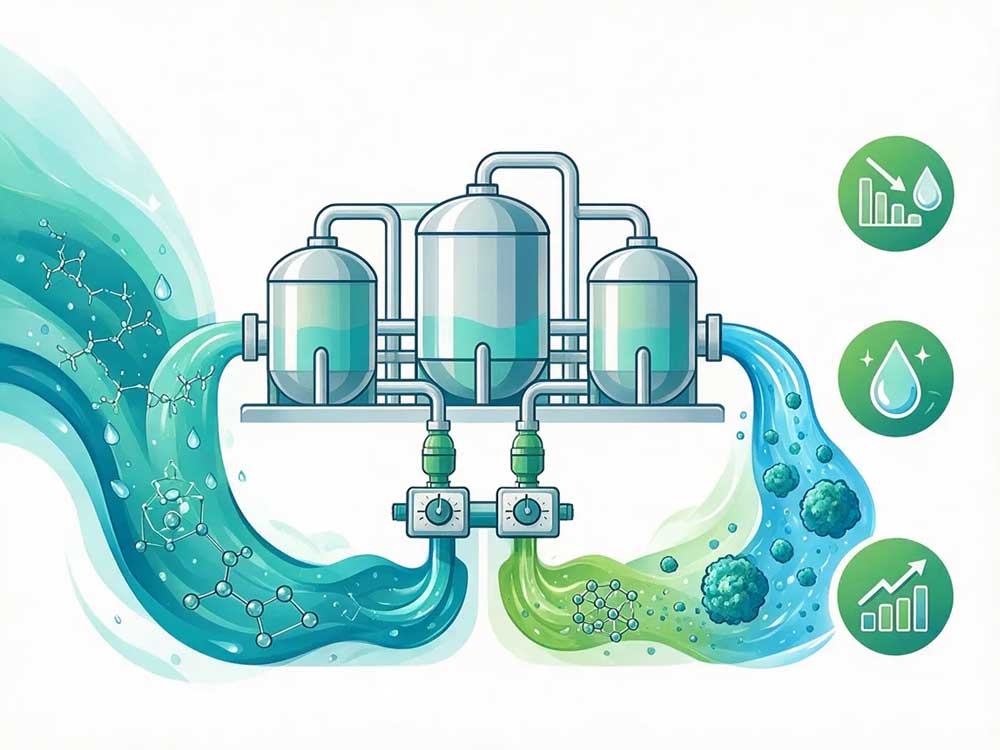
For modern water utilities, achieving sustainable water treatment requires more than simply selecting effective chemicals. The key challenge is to develop a balanced coagulation strategy that delivers reliable water quality while minimizing chemical consumption and operational impacts.
PolyDADMAC can play an important role in coagulant optimization strategies by improving the efficiency of coagulation processes. Rather than replacing all traditional coagulants, PolyDADMAC is often used as a coagulant aid or as part of a combined treatment program with inorganic coagulants such as aluminum sulfate or Polyaluminum Chloride (PAC).
1. Optimizing Inorganic Coagulant Usage
In conventional water treatment systems, inorganic coagulants are commonly used to remove turbidity, suspended solids, and natural organic matter. However, excessive dosing may lead to:
- Higher chemical consumption
- High-cost sludge treatment
- Additional treatment and disposal requirements
- Greater environmental impact associated with heavy chemical use
By introducing PolyDADMAC into the coagulation process, water utilities may improve particle destabilization and floc formation, allowing the treatment system to operate with a more optimized coagulant dosage.
A well-designed PolyDADMAC-assisted coagulation program can help utilities find the right balance between treatment performance and chemical efficiency.
2. Improving Jar Test and Dosage Optimization
Coagulation performance depends on many factors, including:
- Raw water quality
- Turbidity level
- Organic matter content
- pH and alkalinity
- Seasonal variations
For this reason, water utilities should evaluate PolyDADMAC performance through laboratory jar testing before full-scale application.
Jar tests can help determine:
- Optimal PolyDADMAC dosage
- Compatibility with PAC or aluminum sulfate
- Mixing conditions
- Floc formation characteristics
- Reduction in total chemical demand
This data-driven approach allows operators to avoid unnecessary chemical addition and improve process efficiency.
3. Supporting Sustainable Operation of Municipal Water Plants
Water utilities are increasingly focusing on sustainable procurement and resource-efficient operation. Chemical optimization has become an important part of this transition because treatment chemicals represent both an operational cost and an environmental consideration.
By incorporating PolyDADMAC into optimized coagulation programs, utilities can potentially achieve:
- More efficient contaminant removal
- Lower overall chemical consumption
- Improved coagulation stability under changing water conditions
- Better alignment with low-carbon water treatment objectives
4. Combining PolyDADMAC with Existing Treatment Processes
PolyDADMAC is flexible and can be integrated into different water treatment configurations, including:
- Drinking water clarification
- Municipal wastewater treatment
- Industrial wastewater treatment
- Pretreatment before filtration or membrane processes
Common strategies include:
PolyDADMAC + PAC: Used to enhance charge neutralization and improve floc formation.
PolyDADMAC + Aluminum Sulfate: Used to optimize traditional coagulation systems and improve suspended solids removal.
PolyDADMAC as a primary coagulant: Applied in certain wastewater treatment applications where rapid particle destabilization is required.
Moving Toward More Efficient Coagulation Management
For water utilities pursuing lower-carbon operations, coagulant optimization is a practical pathway to improve sustainability. PolyDADMAC provides an opportunity to enhance coagulation efficiency while supporting better chemical management practices.
By combining appropriate chemical selection, accurate dosing, and regular process optimization, water treatment plants can reduce resource consumption and move toward more sustainable and efficient operations.
Supporting Low-Carbon Goals Through Efficient Chemical Management
Treatment chemicals have an environmental footprint throughout their life cycle, including raw material extraction, manufacturing, packaging, transportation, and final application. Therefore, improving chemical efficiency can help reduce unnecessary resource consumption and support broader low-carbon water management objectives.
For municipal water treatment plants, efficient chemical management involves several key practices:
- Optimizing chemical dosage: Applying the right amount of coagulants and flocculants based on actual water quality conditions helps avoid excessive chemical use while maintaining treatment performance.
- Selecting high-efficiency treatment chemicals: Chemicals with strong charge neutralization and floc formation capabilities can improve treatment efficiency and reduce the need for higher dosages of conventional coagulants.
- Monitoring and adjusting treatment processes: Regular jar testing, water quality analysis, and process optimization allow operators to maintain stable performance under changing raw water conditions.
PolyDADMAC can support these practices by improving coagulation efficiency and helping water utilities optimize their chemical programs. Learn more about our PolyDADMAC for water treatment applications. When used appropriately, it can enhance particle removal, improve floc characteristics, and support more efficient use of other coagulants such as PAC or aluminum sulfate.
However, achieving low-carbon water treatment requires a comprehensive approach. PolyDADMAC is not a standalone solution for carbon reduction, but it can be part of a broader strategy that combines chemical optimization, process improvement, energy efficiency, and sustainable operational management.
For water utilities, adopting efficient chemical management practices represents a practical step toward reducing resource consumption and supporting long-term environmental goals. By improving treatment efficiency while minimizing unnecessary chemical inputs, water operators can move closer to more sustainable and resilient water treatment systems.
References
- Lui et al. (2025). Life cycle assessment of drinking water and wastewater treatment works in mainland Scotland. Science of the Total Environment.
- Yateh et al. (2025). Understanding the influence of energy and chemical use on water treatment plants carbon emissions accounting. Journal of Water Process Engineering.
- Comparative life cycle assessment of energy and coagulant optimisation in real and virtual water treatment plants. Water Science and Engineering.
- Carbon footprint and sensitive design parameters of wastewater treatment plants. Water (MDPI).
Post time: Jul-22-2026