

In the sugar industry, foam generation is a common phenomenon. Foam affects various stages of sugar production, from juice clarification and filtration to evaporation and crystallization. Foam can impact both the yield and quality of the sugar. Using effective Antifoaming Agents is crucial for maintaining process stability and ensuring consistent sugar quality.
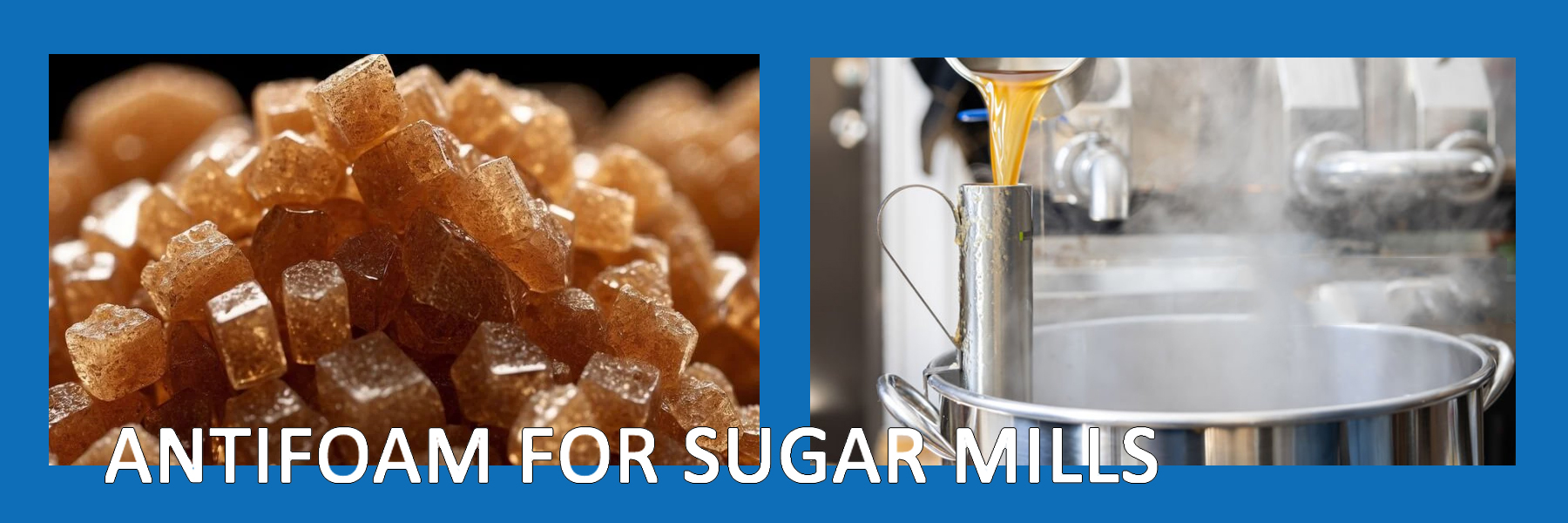
Causes of Foam Formation During Sugar Production
- Natural surfactants in sugarcane
- Presence of waxes, proteins, and organic compounds
- Mechanical stirring during extraction and clarification processes
- High-temperature evaporation process
When foam forms on the liquid surface, it creates a thin film that reduces production efficiency. This leads to decreased yield and increased costs. Furthermore, foam can also cause spills, resulting in the loss of valuable product.
Causes of Foam Formation During Sugar Production
Antifoaming and defoaming agents are used to address the problems mentioned above. These solutions can be added to liquids to reduce surface tension, thus preventing foam formation. If foam has already formed, defoaming agents can be added to break down the foam and prevent it from causing further problems.
• Juice Extraction and Clarification
Sugarcane juice contains impurities that easily produce foam during the pressing process. Adding antifoaming agents helps reduce foam by:
Lowering surface tension
Improving sedimentation
Increasing clarification efficiency
This results in clearer juice and better subsequent processing results.
• Evaporation and Concentration
Foam accumulation inside evaporators can lead to:
Reduced heat transfer efficiency
Causing air blockage
Leading to production interruptions
Stable, heat-resistant antifoaming agents ensure continuous boiling and prevent overflow.
• Crystallization
Foam generated during crystallization affects crystal growth. The correct amount of antifoaming agent:
Ensures uniform crystal formation
Prevents scaling and uneven sugar quality
• Wastewater Treatment
Wastewater in sugar mills also generates foam during aeration or stirring. Using wastewater-grade antifoaming agents can improve:
Biological treatment effectiveness
Sludge sedimentation
Overall plant efficiency
The Advantages of Using Defoamers in the Sugar-Making Process
Higher processing efficiency
Defoamers can enhance equipment performance, reduce downtime, and maintain the stability of production lines.
Reduce product loss
Reducing overflow and better controlling foam can prevent sugar loss during evaporation and filtration processes.
Better heat transfer performance
Defoamers can eliminate the foam layer that hinders heat exchange, thereby enhancing energy efficiency.
Improvement of product quality
A stable boiling and crystallization process can ensure that the color and purity of sugar remain consistent.
Reduce operating costs
Reducing the frequency of cleaning, minimizing downtime, and extending the service life of equipment can help lower costs.
How to Choose the Right Defoamer for Your Sugar Factory
When choosing a defoamer, factors such as active ingredients, food safety, defoaming performance and applicability need to be considered.
The demand for defoamers in different process links
Sugarcane juice pressing and clarification
Required:
Rapid defoaming and anti-foaming
Compatible with clarifiers (PAC, PAM, lime, etc.)
It does not affect the sedimentation velocity
Evaporation system
Key considerations:
High-temperature resistant (>100℃)
Does not affect the heat exchange efficiency
Does not stratify or float oil under conditions of high solid content
At this stage, silicon-based defoamers usually work best.
Crystallization section
Requirement
Stable defoaming without affecting crystal growth
Does not cause impurities in the product or affect the sugar color
High-purity food-grade defoamers can be selected.
Wastewater treatment of sugar factories
Lower-cost mineral oil or polyether defoamers can be selected, which are suitable for aeration tanks and mixing tanks.
Select the appropriate type of defoamer based on production requirements
|
Antifoam Type |
Applicable Process |
Key Advantages |
Notes / Considerations |
|
Silicone Antifoam |
Evaporation, boiling, high-temperature processes |
- Fast defoaming - Heat-resistant - Low dosage, cost-effective - Stable in high-salt and high-solid conditions |
- Use food-grade prducts for direct sugar juice contact |
|
Food-Grade Antifoam (E900) |
Juice extraction, clarification, carbonation, crystallization |
- Compliant with FDA/EU food regulations - Safe for food contact - Does not affect sugar quality |
- Generally higher cost than industrial-grade products |
|
Mineral Oil-Based Antifoam |
Wastewater treatment, aeration tanks, mixing tanks |
- Low cost - Stable foam suppression - Suitable for non-food-contact stages |
- Not suitable for direct food-contact processes |
|
Polyether Antifoam |
Evaporators, high-temperature/high-viscosity sugar syrup |
- Heat-stable - Long-lasting foam suppression - Effective in high-viscosity systems |
- Requires on-site testing for process compatibility |
Key indicators for defoamer selection
When choosing defoamers, the following indicators should be given particular attention:
Defoaming speed
Quickly break the bubbles to prevent overflow and production interruption.
Long-lasting antifoaming effect
Defoamers need to maintain long-lasting anti-foaming effects under high-temperature and high-shear conditions.
High-temperature resistance performance
Especially in the evaporation section, where the temperature should exceed 110℃.
Product safety
Food-grade defoamers must be selected for the food contact section.
Compatibility with other chemicals
Clarifying agent
Flocculant
Dosage of lime
Must not affect the stability of sugar juice
The impact on product quality
Must not affect the sugar color, grain size or purity.
Usage cost
The cost-effectiveness of products should be evaluated from "cost per use" to "defoaming cost per ton of sugar".
Guidelines for Recommended Dosage of Defoamers in the Sugar Industry
The specific values may vary depending on the quality of the sugar and processing conditions.
Juice clarification: 10-50 ppm
Evaporation: 5-30 ppm
Crystallization: 5-20 ppm
Wastewater treatment: 10-100 ppm
Start with small-scale tests and optimize the dosage based on the on-site test results.
By controlling the foam at different processing stages, sugar manufacturing enterprises can increase production, ensure stable product quality and reduce operational problems. The selection of the appropriate defoamer, whether silicon-based, mineral oil-based or food-grade, will have a significant impact on production performance and overall production costs.
More information about the sugar industry can be found in "Chemical Solutions for the Sugar Industry". Hopefully, this will be helpful to you.
Post time: Dec-09-2025