

Calcium Hypochlorite is one of the most widely used chemicals for Pool Disinfection and Shock, maintaining its enduring prominence within the field of pool chemicals. This popularity is attributed to its high effective chlorine content and rapid dissolution rate.
Maintaining a clean and safe swimming pool requires more than just routine chlorination. When contaminants accumulate—whether due to heavy usage, environmental debris, or algal blooms—shock treatment becomes absolutely essential.
To achieve optimal results and ensure safety, the proper dilution of calcium hypochlorite is critical. This guide provides a comprehensive and professional overview of how to dilute calcium hypochlorite for pool shock treatments, covering dosage calculations, safety precautions, and best practices.
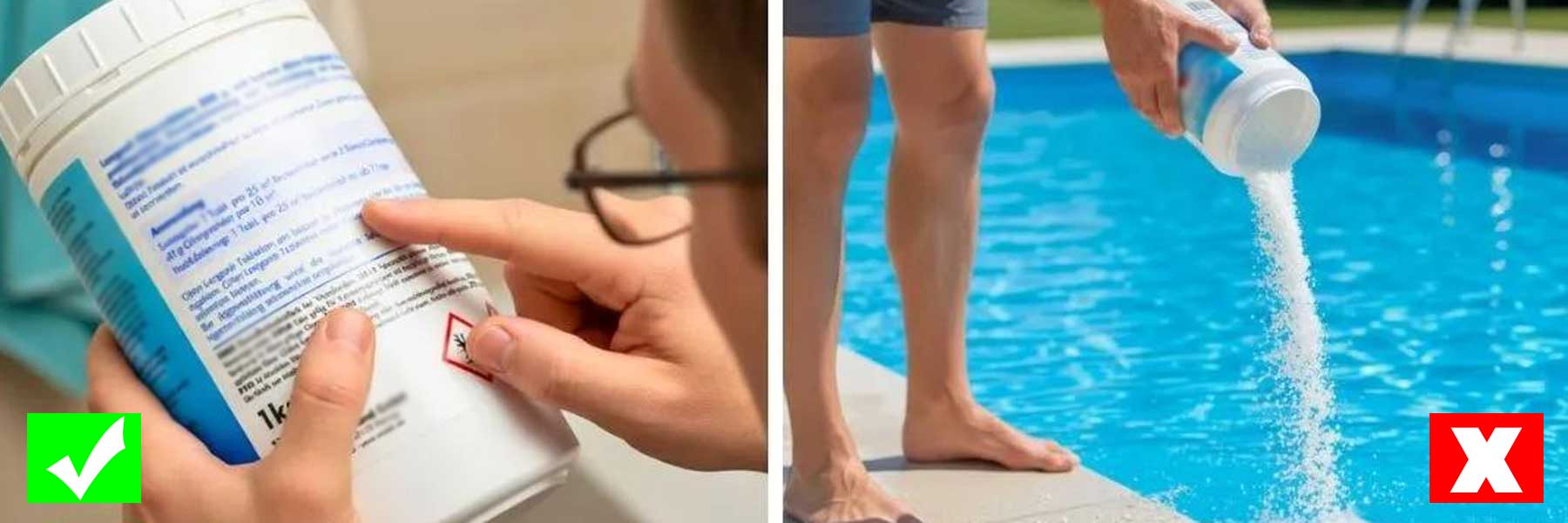
When Should You Shock Your Pool?
Timing is just as important as the method itself. A shock treatment should be performed in the following situations:
- When swimming pool loading is high.
- After heavy rain or strong winds.
- When algae growth becomes visible.
- If the water appears cloudy or has a strong chlorine odor.
- When combined chlorine (chloramine) levels rise.
Regular shock treatments help restore free chlorine levels and maintain clear water.
How to Dissolve Calcium Hypochlorite for Pool Shock Treatment
Step 1: Prepare Your Tools
Before you begin, please prepare these necessary tools:
- A clean plastic bucket (avoid using metal containers)
- Protective gloves and safety goggles
- A stirring stick (plastic or wooden)
- Clean water
Step 2: Determine the Correct Dosage
The required dosage depends on the size of the pool and the condition of the water.
- Typically, during a shock treatment, the free chlorine level needs to reach 5–10 ppm.
- For severe contamination or algae outbreaks, higher levels of shock treatment may be required.
For specific dosage calculations, please refer to the "Calcium Hypochlorite Dosage Guidelines"
Step 3: Pre-Dissolving
First, fill the bucket with clean water, and then add the calcium hypochlorite.
Slowly add the measured chemical into the water while continuously stirring.
- Avoid adding large quantities of calcium hypochlorite at once.
- Stir until the majority of calcium hypochlorite has dissolved.
- A small amount of undissolved residue is normal.
Step 4: Apply the Solution to the Pool
Evenly distribute the supernatant (the clear liquid layer) of the diluted and settled solution around the perimeter of the pool.
Best practices include:
- Focusing on the deeper sections of the pool
- Avoiding pouring large amounts into a single spot
- Keeping the pool's circulation system running
Why Should Calcium Hypochlorite Be Pre-Dissolved Before Use?
1. Upon dissolution, calcium hypochlorite generates insoluble residues—such as calcium carbonate—which, if added directly to the pool, these carbonate should make the pool water cloudy.
2. Undissolved calcium hypochlorite particles may settle at the bottom of the pool, potentially causing discoloration or corrosion of the pool's liner and finishes.
3. Pre-dissolving ensures the uniform dispersion of the chlorine solution, thereby enhancing overall disinfection efficiency.
4. Handling a diluted solution reduces the risk of localized high chlorine concentrations and accidental exposure.
Avoid Common Mistakes
Even experienced operators can make errors that reduce efficiency or create risks.
Direct Application
Direct application can lead to uneven chlorine distribution and surface damage.
Incorrect Dosage
Overdosing can cause irritation and equipment damage, while underdosing reduces effectiveness.
Poor Water Circulation
If circulation is inadequate, the disinfectant will be distributed unevenly.
Using Contaminated Containers
Residues from other chemicals may trigger adverse reactions.
Tips for Maximizing the Efficacy of Calcium Hypochlorite Shock Treatment
Calcium Hypochlorite: Environmental and Storage Considerations
Storage
Store calcium hypochlorite in a cool, dry, and well-ventilated area. Ensure the lid is tightly sealed to minimize chlorine loss. Be sure to store the product on a shelf where it cannot be accidentally knocked over or contaminated by liquids on the floor.
Disposal
Never dispose of used pool chemicals in household trash bins. If you have expired or unusable calcium hypochlorite, please contact your local hazardous waste disposal agency for proper disposal instructions.
Necessary Precautions
Before opening the container, ensure you understand the underlying chemical principles. Calcium hypochlorite is a strong oxidizing agent. Contact with organic materials—such as oil, gasoline, or even small amounts of other pool chemicals—can trigger a fire and may cause severe chemical burns to the skin and lungs.
Personal Protective Equipment (PPE)
Wear chemical-resistant gloves: Heavy-duty rubber or nitrile material.
Wear safety goggles: Splash protection is required.
Wear a face mask: To prevent inhaling fine chlorine dust.
Avoid contact with clothing: Chlorine will instantly bleach fabrics.
Conclusion
Properly diluting calcium hypochlorite is not merely a recommended practice; it is an essential prerequisite for safe, effective, and professional pool maintenance. By adhering to the correct operational procedures, you can:
- Maximize disinfection efficiency
- Protect pool surfaces and equipment
- Ensure swimmer safety
For distributors, facility managers, and pool service providers, mastering this process enhances operational quality and boosts customer satisfaction.
If you are seeking high-quality calcium hypochlorite—along with a stable supply and technical support—partnering with a reliable Calcium Hypochlorite Supplier ensures consistent results and long-term value.
YunCang Chemical offers more than just calcium hypochlorite. We provide comprehensive and dependable procurement and after-sales services to support your business growth:
Whether you are looking to expand your product line or seeking a long-term partner, we are here to support you with competitive pricing and reliable service.
Contact us today for a quote, product samples, or technical consultation—let's expand your market together.
Post time: May-13-2026


