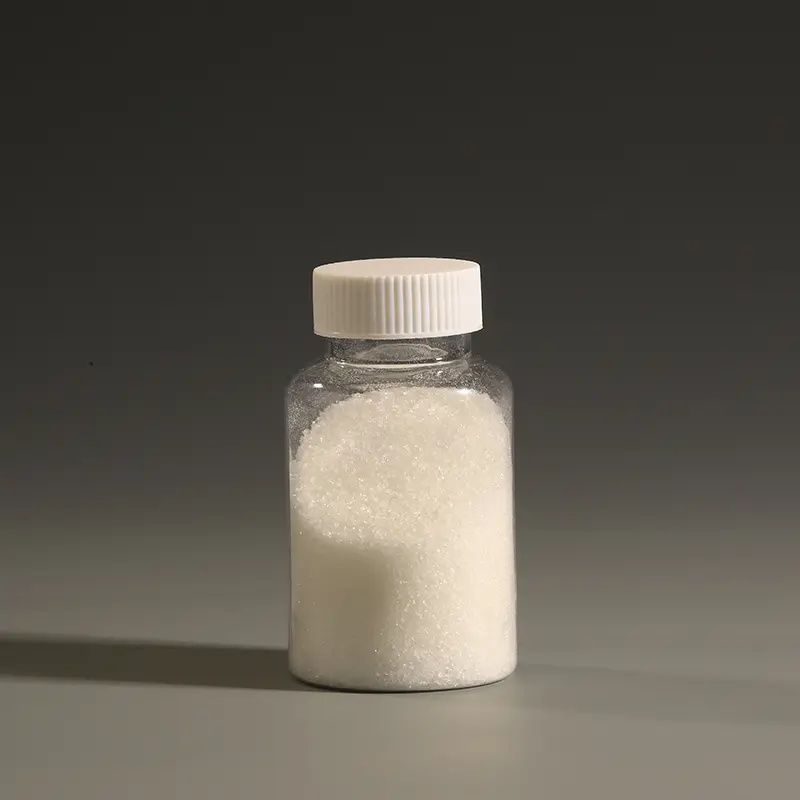
Efficient wastewater treatment is a critical requirement for modern industries facing increasingly strict environmental regulations and rising operational costs. Whether in mining, textile manufacturing, municipal treatment, or oil processing, achieving effective solid-liquid separation directly impacts compliance, efficiency, and profitability.
Among various treatment chemicals, Polyacrylamide (PAM) plays a key role as a high-performance flocculant. However, for many buyers, distributors, and plant operators, determining the correct dosage remains a common challenge.
This comprehensive guide explains how to optimize PAM dosage for industrial wastewater treatment, helping you improve performance while reducing chemical costs.
Explore our full range of water treatment chemicals here: https://www.yuncangchemical.com/products/

Types of Polyacrylamide
- Best for inorganic wastewater
- Common in mining, sand washing, and construction industries
- Effective for high suspended solids
- Ideal for sludge dewatering
- Widely used in municipal and industrial wastewater treatment
- Strong affinity for organic matter
- Suitable for low-charge or complex water conditions
- Used in specific industrial applications
Why PAM Dosage Optimization Is Critical
- Improved floc formation and settling speed
- Reduced turbidity in treated water
- Enhanced sludge dewatering efficiency
- Lower overall chemical consumption
- Stable system operation
| Condition | Result |
|---|---|
| Underdosing | Weak flocs, poor settling, cloudy water |
| Overdosing | Floc restabilization, increased viscosity, higher cost |
Typical PAM Dosage Ranges (Reference Values)
Although exact dosage varies, the following ranges provide a practical starting point:
| Application | Dosage Range (ppm) |
|---|---|
| Municipal wastewater | 1 – 5 ppm |
| Industrial wastewater | 2 – 10 ppm |
| Sludge dewatering | 5 – 20 ppm |
| Mining / mineral processing | 5 – 30 ppm |
| Textile wastewater | 3 – 15 ppm |
| Paper mill wastewater | 2 – 8 ppm |
Important: These values are indicative only. Actual dosage must be confirmed through testing.
Step-by-Step Guide to Determining Optimal PAM Dosage
Step 1: Prepare PAM Solution
Before dosing, PAM must be properly dissolved:
- Recommended concentration: 0.1% – 0.2%
- Use clean, low-hardness water
- Stir gently to avoid polymer degradation
- Dissolution time: 30–60 minutes
Step 2: Conduct Jar Testing
Jar testing is essential for accurate dosage determination.
Procedure:
- Collect representative wastewater samples
- Add varying PAM dosages (e.g., 2 ppm, 5 ppm, 8 ppm)
- Mix and observe flocculation
- Allow settling
- Compare results
Step 3: Evaluate Performance Indicators
Key indicators include:
- Floc size and density
- Settling speed
- Supernatant clarity
- Sludge volume
Step 4: Optimize Dosage
Adjust dosage based on observations:
- Small flocs → increase dosage
- Loose or floating flocs → reduce dosage
- Turbid water → adjust type or combine with coagulant
Combining PAM with Coagulants (PAC + PAM Strategy)
In many industrial applications, PAM is used together with coagulants such as Polyaluminum Chloride (PAC).
Why Use PAC + PAM?
- • PAC neutralizes particle charge
- • PAM bridges particles to form larger flocs
Advantages of using PAC and PAM together
- ✓ Reduced total chemical usage
- ✓ Faster settling
- ✓ Improved clarity
- ✓ Better sludge dewatering
Learn more about coagulation strategies:
https://www.yuncangchemical.com/news/how-to-combine-pac-and-pam-in-coagulation/
Key Factors Affecting PAM Dosage
Wastewater Characteristics
- Suspended solids concentration
- Organic vs. inorganic content
- Oil and grease levels
- Higher contamination typically requires higher dosage.
pH Value
- Optimal pH depends on PAM type
- Extreme pH reduces effectiveness
- Adjustment may be required before dosing
Temperature
- Low temperature slows reaction
- Higher dosage may be needed in winter
Mixing Conditions
- Insufficient mixing → poor distribution
- Excessive shear → polymer degradation
Sludge Properties
- Sludge concentration
- Particle size distribution
- Organic content
These factors are especially important in sludge dewatering applications.
Common Mistakes in PAM Application
Avoiding these mistakes can significantly improve performance:
- Adding dry PAM directly into wastewater
- Using incorrect PAM type
- Skipping jar testing
- Overdosing to “speed up” treatment
- Poor solution preparation
Practical Tips for Cost Optimization
To maximize ROI when using PAM:
Why Choose Yuncang as Your PAM Supplier?
- ✓
Full range of PAM products (APAM, CPAM, NPAM) - ✓
Stable molecular weight and charge density - ✓
Customized solutions for different industries - ✓
Technical support including jar testing guidance - ✓
Strong production capacity and global delivery
Conclusion
Polyacrylamide (PAM) is a powerful and versatile flocculant, but its effectiveness depends heavily on proper dosage. While general guidelines provide a starting point, optimal results require a combination of:
Correct product selection
Proper preparation
Laboratory testing
Field optimization
By following these best practices and partnering with a reliable supplier, you can significantly improve wastewater treatment efficiency while minimizing operational costs.
- Product selection
- Dosage optimization
- Free sample testing
- Customized treatment solutions
Related Articles
Post time: Mar-25-2026